
How Weather Affects Greyhound Racing and Forecast Bets
 Available in US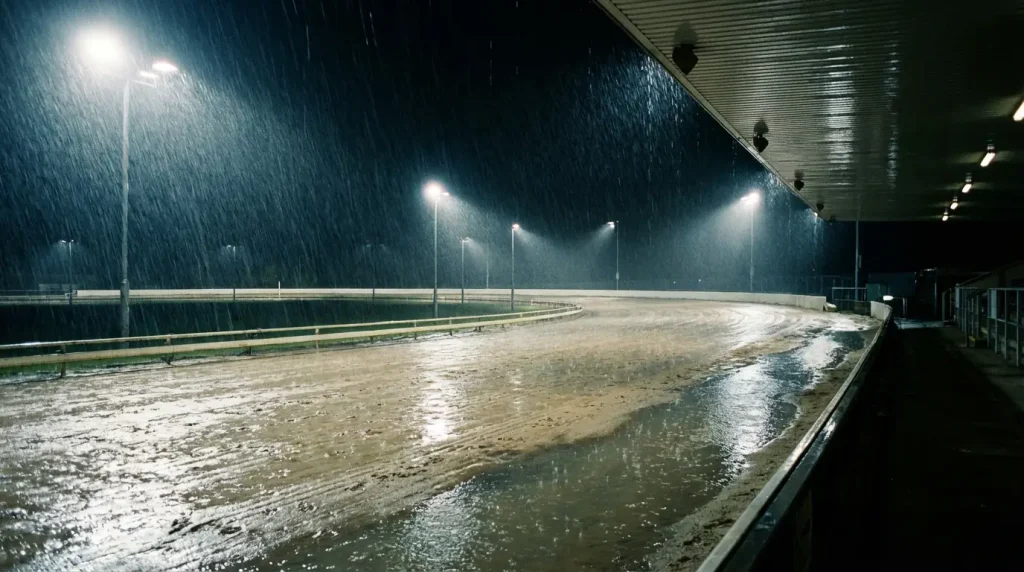
Conditions Change the Race
A greyhound race card studied indoors on a dry morning looks different by the time rain sets in at an evening meeting. Weather does not just affect times — it alters the fundamental dynamics of how dogs run, which traps gain or lose advantage, and which running styles are rewarded. Most punters treat weather as background noise. Forecast bettors who pay attention to conditions can find edges that the market consistently underprices, precisely because most of the money ignores them.
The effects are not dramatic in the way that heavy ground transforms a horse race, but they are measurable and consistent enough to matter. A persistent drizzle at a track with poor drainage can shift the trap bias for an entire meeting. A strong headwind down the back straight can turn a front-runner’s two-length lead into a one-length advantage by the final bend. These are small changes in absolute terms, but in a sport where most races are decided by margins of a length or less, they translate directly into forecast outcomes.
Track Surfaces and Going
UK greyhound tracks use sand-based surfaces, either natural sand or manufactured all-weather blends. Unlike horse racing, there is no formal going description published before each meeting. You will not see “good to firm” or “heavy” in the race card. The condition of the surface is largely inferred from weather reports, local knowledge, and — for those betting on track — visual inspection.
Sand surfaces behave differently from turf. When dry, the sand is firm and fast, producing quick times and rewarding dogs with natural speed. When wet, the surface softens and slows, adding fractions of a second to run times across the board. The effect is not uniform — some dogs handle wet sand better than others, and the degree of saturation matters. A light shower might produce a surface that is slightly tacky but still quick. Prolonged heavy rain can make the surface genuinely testing, particularly on the bends where dogs push off laterally and need grip to hold their line.
Drainage is the hidden variable. Tracks with good drainage recover quickly after rain and maintain consistent conditions throughout a meeting. Tracks with poor drainage can become progressively heavier as the card goes on, meaning the going in the first race is different from the going in the eighth. If you are betting across a full card, be aware that conditions can deteriorate through the evening and adjust your later selections accordingly.
Some dogs are noted on the race card or in form commentary as “likes a wet track” or “better on quick ground.” These notes are worth taking seriously. A dog that has a string of poor results on dry sand but suddenly finds form when it rains is responding to the surface change, and if rain is forecast for the next meeting, that dog becomes a forecast contender that its recent form would not suggest.
How Rain Changes the Race
Rain affects greyhound racing in three specific ways. First, it slows the surface. Overall race times increase, and the dogs with the highest raw speed lose some of their advantage. Speed merchants that win on fast ground by sheer pace can struggle on a wet track because their rivals can stay closer for longer. This compresses the field and produces tighter finishes — which, for forecast bettors, means more unpredictable finishing orders and potentially higher dividends.
Second, rain changes the grip dynamics on the bends. On a dry track, dogs can hold their line through bends with minimal skidding. On a wet track, the reduced traction causes dogs to drift wider on the turns, particularly if they are carrying speed into the bend. This penalises railers who rely on tight bend-running and rewards wide runners who take a slower, more controlled route around the outside. If you know a meeting is running on a wet surface, shift your forecast selections slightly toward wide runners and away from pure speed-based railers.
Third, rain can disrupt the consistency of trap bias. The drainage patterns at any given track are not perfectly uniform — one side of the track may drain faster than the other. If the inside rail sits in a low-drainage zone, the going along the fence can be heavier than the going further out. This temporarily reverses the usual inside-trap advantage and creates conditions where outside draws fare better than the long-term data suggests. These are short-term shifts, not permanent changes, but they are actionable within a single meeting if you identify them early.
A practical tip: watch the first two races of a wet meeting before committing significant stakes. The results and the running will tell you how the track is playing — whether railers are still holding the rail, whether wide runners are benefiting from the conditions, and whether the overall pace is slower than the form figures predict. Two races of live data is worth more than any pre-meeting forecast.
Wind and Temperature
Wind is the least-discussed weather variable in greyhound betting but one of the most physically impactful. Greyhounds are lightweight, aerodynamic animals running at speeds of up to 45 mph. A strong headwind or tailwind noticeably affects their pace, particularly on exposed straights. A headwind down the home straight slows the front-runners and gives chasers a marginal advantage as they draft behind the leaders. A tailwind does the opposite, amplifying the leader’s speed advantage and making it harder for the field to close.
Crosswinds affect dogs differently depending on their running line. A crosswind blowing from the inside rail outward can push railers off their preferred line, while a wind blowing inward can compress the field toward the rail. These effects are subtle but real, and they are almost never priced into the betting market because most punters do not check the wind direction before placing a forecast.
Temperature matters less directly but has secondary effects. Cold conditions can stiffen dogs’ muscles, particularly older runners or those prone to injury. Warm conditions can make the sand surface faster if it is dry, or stickier if there is moisture present. Dogs racing in their first meeting after a winter break may need a run to reach peak sharpness, and conditions play a role in how quickly they find their rhythm.
None of these factors should override strong form, but when two dogs are closely matched and you are choosing between them for a forecast position, the weather conditions on the night can be the tiebreaker.
Adjusting Your Selections for Conditions
The practical application of weather analysis for forecast betting comes down to three adjustments. First, in wet conditions, favour dogs with proven form on soft surfaces and discount pure speed dogs that rely on fast ground. Second, in windy conditions, consider whether the wind direction helps or hinders front-runners on the specific track layout. Third, when conditions are deteriorating through a meeting, adjust your later-race selections to account for a slower surface than the early results suggested.
These adjustments do not require meteorological expertise. Check the weather forecast for the track location before the meeting. If rain is expected, note which dogs in each race have form on wet surfaces. If strong wind is forecast, consider whether the track layout exposes the straights or the bends to the prevailing direction. This takes five minutes before a meeting and gives you an informational edge over punters who treat every meeting as if conditions are identical.
Track conditions also interact with trap bias. At tracks where you have noted a strong Trap 1 bias in dry conditions, check whether that bias holds on wet nights. If the inside rail area drains poorly, Trap 1’s advantage may evaporate when it rains. A few months of comparing wet-night results to dry-night results at your preferred track will reveal whether the conditions meaningfully shift the bias — and if they do, you have an edge that updates automatically every time you check the weather.
Conditions as a Quiet Edge
Weather is the variable that most forecast punters ignore and the one that is most straightforwardly observable. You can see the rain, feel the wind, and check the forecast before every meeting. It requires no proprietary data, no subscription, and no specialist knowledge — just the discipline to incorporate it into your analysis. Most of the money in the forecast market is weather-blind. The punter who is not has a persistent, low-effort edge that compounds across every wet or windy meeting of the year.
Get more race analysis at greyhoundforecast.
Also read our greyhound sectional times analysis.
