
Greyhound Forecast Betting: Track vs Online Comparison
 Available in US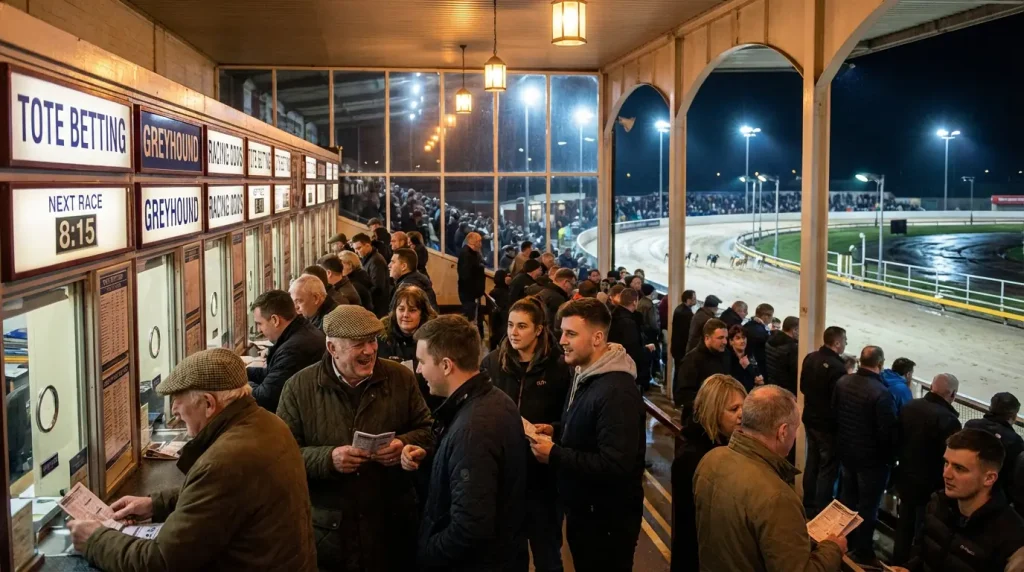
Two Ways to Back the Same Bet
A greyhound forecast bet placed at the track window and the same bet placed through an app on the drive home are the same selection — but the experience, the settlement, and sometimes the return are different. On-track betting and online betting serve different punters with different priorities, and understanding where they overlap and where they diverge helps you choose the right method for the way you bet.
The UK still has 18 licensed tracks where you can watch live racing and bet in person. The online market offers access to those same meetings through dozens of bookmakers, plus live streaming for most cards. Neither channel has a monopoly on value, but each has structural characteristics that suit different types of forecast bettors.
The On-Track Experience
Betting at the track means tote windows, bookmaker pitches on the rails, and the visceral immediacy of watching the race unfold thirty metres in front of you. For forecast bettors, the on-track environment offers one thing that no app can replicate: firsthand observation. You see the dogs in the parade ring. You watch how they move to the traps. You assess their physical condition — coat, muscle tone, demeanour — in a way that a race card photograph never captures.
Some experienced forecast punters insist that watching the dogs walk to the traps is worth more than any amount of form data. A dog that is alert, eager, and straining at the leash is a different prospect from one that looks flat, reluctant, or distracted. These observations are subjective and impossible to quantify, but they are real information that can tilt a marginal forecast decision.
On-track betting also gives you direct access to the tote. The forecast pool is formed by the aggregate of all on-track and off-course tote bets, but the speed of execution at the track window — placing or adjusting your bet right up to the off — can be faster than navigating an app. For punters who like to assess the pool composition before committing, the on-track tote displays show the current pool size and distribution in real time.
The limitations are practical. You can only bet at tracks you can physically attend, which restricts your racing calendar. The track environment has social distractions — the bar, the crowd, the commentary — that can disrupt analytical focus. And the on-track bookmaker pitches, while offering odds on win bets, do not always price up forecasts, which means the tote is often your only forecast option at the track.
The Online Experience
Online forecast betting through bookmaker apps and websites is how the majority of UK greyhound punters now operate. The advantages are access and data. Every GBGB meeting is available, along with selected Irish and international cards. Race card data is comprehensive on the better platforms — full form, times, grades, race comments, and often sectional data. You can compare prices, switch between CSF and tote settlement, and place bets across multiple meetings simultaneously.
The speed of online betting suits the rhythm of greyhound racing. With races running every ten to fifteen minutes across multiple tracks on a busy evening, the online punter can scan cards, place forecasts, and track results across several venues within a single session. Doing this at a physical track is impossible — you are locked into whatever card is running at your venue.
Live streaming, available at most major bookmakers, partially replicates the on-track visual experience. You can watch the parade, the traps, and the race in real time, though the camera angles and resolution are not always ideal. Streaming is a compromise — it gives you some of the visual information that on-track observation provides, but filtered through a camera rather than seen with your own eyes.
The downside of online betting is the absence of the live environment. You miss the physical assessment of the dogs, the atmosphere of the crowd, and the tactile feedback of handling a paper race card and a pencil. For some punters, this does not matter. For others, the track experience is an integral part of their analytical process, and online betting feels detached by comparison.
Odds and Payout Comparison
The CSF is the same whether you bet on-track or online — it is an industry-wide calculation that does not vary by channel. If you bet a forecast at CSF through Bet365 or at CSF through a track-side bookmaker, the dividend is identical.
The tote dividend is also nominally the same, since the pool is shared across all tote outlets — on-track, online, and through retail partnerships. However, the timing of your tote bet can marginally affect your experience. On-track bets placed in the final seconds before the off capture the final pool composition. Online tote bets placed via an app may face a fractional delay in execution, though for most purposes the difference is negligible.
Where on-track and online bets differ is in the availability of alternative pricing. Online bookmakers occasionally offer early forecast prices or enhanced-dividend promotions that are not available at the track. Track-side bookmakers may offer odds on forecast outcomes at the rails, but this is inconsistent and depends on the meeting and the bookmaker. In general, the online channel offers more pricing options for forecast bettors than the on-track channel.
On-track tote pools can sometimes behave differently during a meeting where the on-course crowd is heavily backing a specific dog. The pool distribution at a well-attended Saturday evening meeting at Romford will reflect the on-course crowd’s preferences, which may differ from the online market’s view. This can create small discrepancies between what the tote pays and what the CSF would have paid — and for the alert punter, these discrepancies are occasionally exploitable.
Practical Differences
Record-keeping is easier online. Every bet placed through a bookmaker account is recorded automatically, and most platforms allow you to download your betting history as a spreadsheet or statement. On-track tote bets require manual recording — if you lose the slip, you lose the record. For any punter tracking their forecast results seriously, the online trail is a significant advantage.
Cashflow management is also simpler online. Deposits and withdrawals are tracked, bankroll balances are visible, and loss-limit tools are available on most licensed platforms. At the track, the bankroll is whatever cash you brought, and the discipline of sticking to limits is entirely self-imposed. Some punters find the physical constraint of finite cash in their pocket more effective than a number on a screen. Others find it restrictive.
Bet variety is broader online. Combination forecasts, forecast accumulators, and patent bets are all straightforward to place through a bookmaker app. At the track tote, the forecast options are typically limited to straight and reverse forecasts — combination bets may require manual assembly at the window, which is slower and more prone to error.
The tax position is identical in both channels. Betting duty in the UK is paid by the bookmaker or tote operator, not the punter. Your returns are the same whether you bet on-track or online — there is no tax advantage to either channel.
Which Suits You
If you value data, speed, and multi-track access, online is the better channel for greyhound forecast betting. The race card data is superior, the betting options are broader, and the record-keeping is automatic. If you value firsthand observation, the atmosphere of live racing, and the discipline of betting with finite cash, the track experience offers something that no app can replicate.
Many regular forecast punters use both. They attend the track for major meetings where the atmosphere and the pool depth justify the trip, and they bet online for routine weekday cards where the convenience of the app outweighs the benefit of being present. The two channels are not competitors — they are complements, and the informed punter uses whichever one suits the specific meeting.
Find more forecast guides at greyhoundforecast.
Also explore our straight forecast greyhound betting guide.
