
Ante-Post Greyhound Betting: Early Odds on Major Races
 Available in US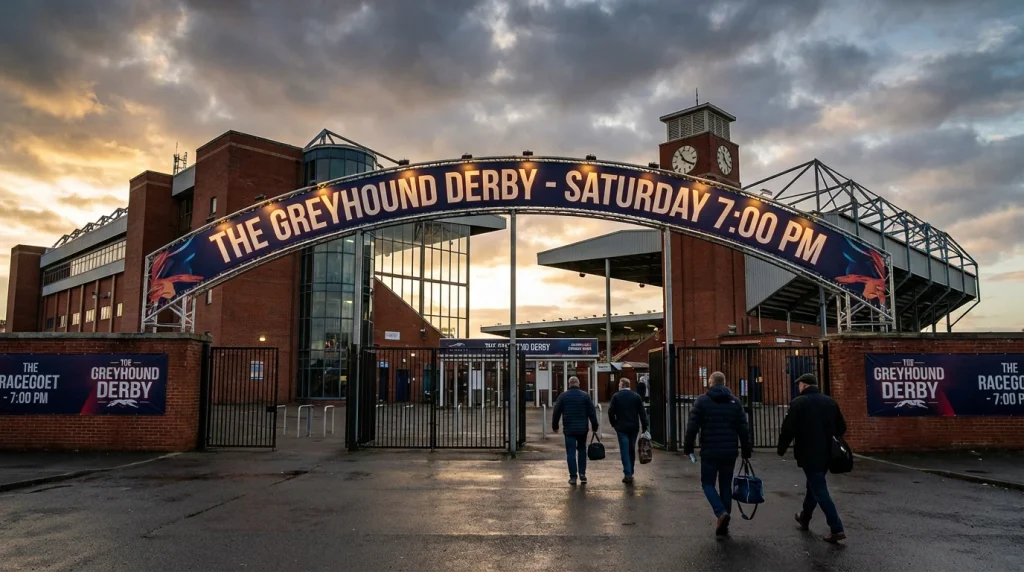
Betting Before the Traps Open
Most greyhound betting happens on the day of the race, often in the final minutes before the off. Ante-post betting works differently — it lets you back a dog weeks or months before the event, locking in odds that may be significantly longer than the price available on race day. The appeal is straightforward: if you identify the winner early, the price is better. The risk is equally straightforward: if the dog is withdrawn, injured, or fails to qualify, you lose your stake with no refund.
Ante-post betting in greyhound racing is limited almost exclusively to the sport’s major events — the English Greyhound Derby, the St Leger, and a handful of other feature competitions. It is a different discipline from everyday forecast betting, requiring longer-term assessment and a tolerance for uncertainty that day-to-day form analysis does not demand.
What Ante-Post Means
An ante-post bet is any wager placed before the official declarations for a race. In greyhound racing, this typically means betting on a major competition before the draw for heats is made, before qualification rounds have been run, or sometimes before the entries are even confirmed. The odds reflect the bookmaker’s assessment of each dog’s overall chance of winning the competition, discounted for the risk that the dog may not make it to the final.
The critical difference from standard betting: ante-post bets are non-refundable. If the dog you backed is withdrawn for any reason — injury, illness, failure to qualify, trainer’s decision — your stake is lost. There is no void, no Rule 4 deduction, and no refund. This is the trade-off for the longer odds. The bookmaker is offering a better price because they are also carrying less risk — they keep the stake on every non-runner, regardless of circumstances.
Some bookmakers offer “non-runner, no bet” (NRNB) terms on selected ante-post markets. Under these terms, your stake is refunded if the dog does not run in the final. NRNB terms are occasionally available on the English Greyhound Derby and other high-profile events, and they significantly reduce the punter’s risk. The odds will be shorter than standard ante-post prices (because the bookmaker is absorbing more risk), but the protection against withdrawal is valuable.
Major Races for Ante-Post Betting
The English Greyhound Derby is the flagship ante-post market in the sport. Bookmakers open Derby betting months before the first heat, and the odds evolve as trials, open races, and early-round results provide form. The Derby runs at Towcester, and the road to the final includes heats, quarter-finals, and semi-finals — multiple rounds where a dog can be eliminated or fail to qualify, which is why ante-post prices on the eventual winner can be significantly longer than the race-day starting price.
The St Leger, held at Nottingham, is the second most prominent ante-post greyhound event. Run over a longer distance than the Derby, it attracts a different profile of dog — one with stamina and sustained pace rather than pure early speed. Ante-post markets for the St Leger typically open closer to the event than the Derby but still offer meaningful price advantages for early backers.
Other events with ante-post interest include the Cesarewitch, the Essex Vase, and various track-level open championships. The ante-post market for these events is thinner — fewer bookmakers price them up, and the liquidity is lower — but the prices can be generous precisely because the market is less competitive and the bookmaker is less informed about the form of every potential entrant.
Irish greyhound derbies also attract ante-post interest from UK punters, though the form data is less accessible and the analysis more reliant on specialist sources. Cross-border ante-post betting requires extra caution: the racing conditions, grading systems, and competition structures differ between the UK and Ireland, and UK form may not transfer directly to Irish events.
Risks and Rewards
The reward of ante-post betting is price. A dog that opens at 20/1 for the Derby and eventually starts the final at 4/1 has delivered a fivefold price advantage to the ante-post punter. These moves are real and they happen in most years — the eventual winner or placed dogs in major competitions almost always shorten significantly from their ante-post prices as the competition progresses and their form becomes more visible to the market.
The risk is attrition. Dogs get injured, lose form, fail to qualify, or are redirected to other events by their trainers. In a typical Derby, the initial ante-post field might include thirty or forty dogs, of which only six reach the final. Backing a dog at 20/1 ante-post gives you a potentially attractive price, but the dog has to survive four or five rounds of competition to reach the final — and at each round, there is a chance of elimination, injury, or poor performance that ends the campaign.
The maths of ante-post greyhound betting is harsh for the majority of bets. If you back five dogs ante-post at 20/1 each and one reaches the final, you have invested five units and your winning bet returns twenty — a profit of fifteen units. But if none of the five makes the final, you have lost five units with nothing to show. The variance is extreme, and profitable ante-post betting requires either a high conversion rate (picking dogs that actually make the final) or sufficiently long odds that the occasional winner covers the accumulated losses.
There is also a liquidity risk. Ante-post markets for all but the biggest events are thin. Getting a meaningful stake on at the advertised odds can be difficult — bookmakers may limit ante-post liabilities on greyhound events, particularly at longer prices. If you find value, act quickly and accept that the stake may be smaller than you would like.
Ante-Post Strategies
The most disciplined ante-post approach is to wait until the competition is partially through before committing. After the first round of heats, the field is reduced, the form picture is clearer, and the remaining dogs have demonstrated their ability under competition conditions. The prices will be shorter than the initial ante-post quotes but still longer than the final-day SP, and the information advantage over the opening market is substantial.
If you do bet early — before heats — focus on dogs with proven open-race form at the track hosting the event. A dog that has run well in open races at Towcester is a more reliable Derby ante-post selection than one with strong graded form at a different track, because the open-race experience and track familiarity reduce two of the biggest uncertainty factors.
Diversification helps manage the risk. Rather than backing one dog with a large stake, spread smaller stakes across two or three selections at longer prices. If one of them reaches the final, the return covers the losing stakes and produces a profit. If none do, the total loss is contained.
Finally, track the market after you bet. If your ante-post selection is performing well and shortening through the rounds, you may have the opportunity to lay the dog on a betting exchange at shorter odds — locking in a profit regardless of the final result. This “trading” approach requires exchange access and some comfort with lay betting, but it converts a single ante-post bet into a hedged position that guarantees a return if the dog makes the later rounds.
The Long-Range View
Ante-post greyhound betting is a niche within a niche. It suits punters who follow the sport closely enough to know the leading kennels, the emerging dogs, and the competition calendar. It rewards patience, risk tolerance, and the willingness to lose stakes on dogs that never reach the final. For those with the knowledge and the temperament, the price advantage of early betting is genuine and can produce returns that day-of-race markets simply cannot match.
Find more odds guides at greyhoundforecast.
Also read our greyhound betting exchanges vs bookmakers.
