
UK Greyhound Racing Calendar: Major Races and Betting Events
 Available in US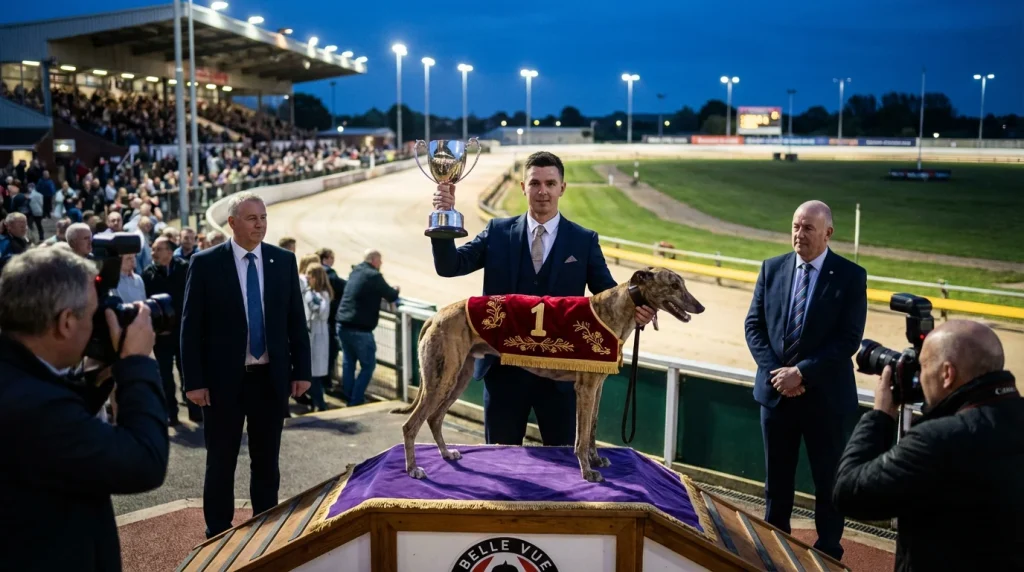
The Races That Matter Most
UK greyhound racing runs year-round, with meetings most evenings across the GBGB circuit. The vast majority are graded cards — routine fixtures that form the backbone of the sport. But punctuating the calendar are the major events: the derbies, the classics, the feature opens. These are the races that draw the best dogs, the biggest crowds, the deepest betting pools, and the most intense media attention. For forecast bettors, they are also the races with the richest data, the highest-quality fields, and the most rewarding analytical challenges.
The English Greyhound Derby
The Derby is the single most prestigious event in UK greyhound racing and the race that defines a generation of dogs. Held at Towcester, the Derby runs as a multi-round knockout competition over 500 metres (GBGB), with heats in late spring leading through quarter-finals and semi-finals to a final typically staged in late June or early July. The prize money is the highest in the sport, and the prestige of winning is unmatched.
For bettors, the Derby is the deepest ante-post market in greyhound racing. Bookmakers open betting months before the first heat, and the market evolves as trials, open races, and early rounds provide form. The rounds themselves are excellent forecast opportunities — the heats produce mixed-ability fields where form reading has a genuine edge, and the semi-finals concentrate the remaining contenders into two six-dog races where class assessment is paramount.
The final itself is the hardest forecast of the year. Six elite dogs, each having survived four or five rounds, line up with minimal separating them. Trap draw and first-bend dynamics become critical differentiators, and the forecast dividend can be modest if the two class dogs fill the frame — or explosive if an unexpected result occurs. The tote pool for the Derby final is among the largest of the greyhound calendar, making it one of the best tote forecast events of the year.
The St Leger
The St Leger is the premier stayers’ event in UK greyhound racing. Historically held at Wembley, Wimbledon, and Perry Barr, the St Leger moved to Nottingham in 2026, run over 730 metres (GBGB). Where the Derby rewards early pace and bend speed, the St Leger demands sustained stamina over a longer distance with additional turns. The race attracts a different profile of dog — marathon specialists rather than sprinters — and the form analysis requires different emphasis, with middle-section times and closing speed more important than first-bend splits.
The St Leger runs as a knockout competition similar to the Derby, with heats and semi-finals leading to a final in the autumn. The ante-post market is smaller than the Derby but still active at major bookmakers. For forecast bettors, the longer distance produces more predictable finishing orders in the early rounds — stamina tells over distance, and the class dogs tend to assert themselves more clearly than in sprint events where a bad first bend can derail anyone.
The Essex Vase and Other Major Opens
The Essex Vase, typically run at Romford, is one of several prestigious open competitions that sit just below the Derby and St Leger in the sport’s hierarchy. Other significant events include the Cesarewitch (a long-distance feature), the TV Trophy, the Oaks (the premier bitches’ event), and various track-level championships at major venues.
These competitions follow similar formats — knockout rounds leading to a final — but with smaller fields and shorter schedules than the Derby. The betting pools are more modest, and the ante-post markets are thinner, but the on-night forecast opportunities can be excellent. Feature events draw strong fields, produce competitive racing, and generate enough betting interest to ensure healthy tote pools and meaningful CSF dividends.
Track-level championships — such as the Romford Puppy Cup, the Nottingham Sprint, or the Hove Gold Cup — are worth monitoring even if they do not make national headlines. These events attract the best dogs from the host track’s regular racing population, which means the form data is comprehensive and the dogs are running on their home surface. For the punter who specialises in a particular track, these events are the highlight of the local calendar and often the best forecast opportunities of the year.
Other Major Races
Beyond the headline competitions, the UK greyhound calendar includes several other events that attract significant betting interest. The Eclipse, run at various venues, is a prestigious sprint event. The Champion Stakes at Romford brings together top-class dogs over the standard distance. The Select Stakes and various puppy classics provide betting opportunities on emerging talent, where the form is newer and the market is less efficient.
Irish-bred dogs competing in UK events add an international dimension. Several major UK competitions attract entries from Irish kennels, particularly the Derby. These dogs may have strong Irish form but limited UK race data, which creates both risk and opportunity for forecast bettors — the market may underprice an Irish contender with strong trial times, or it may overprice one whose form does not transfer to UK conditions.
Charity and exhibition meetings occasionally feature exhibition races with unusual fields — retired champions, celebrity-owned dogs, or cross-track invitational events. These are not standard betting propositions and should be treated as entertainment rather than analytical opportunities. The form data is unreliable, the fields are non-standard, and the betting markets are thin.
Betting the Calendar
For the serious greyhound forecast bettor, the major races serve two purposes. First, they are the best individual betting opportunities of the year — deep pools, high-quality fields, abundant data. Second, they structure the training cycles of the best dogs, which means the form of top kennels is shaped by the competition calendar. Understanding when a kennel is peaking for a major event helps you assess whether its dogs are being fully tested in their graded races or held back for a bigger target.
Mark the key dates in your calendar at the start of each year. Track the qualifying rounds. Build your form database on the dogs that are progressing through the rounds. By the time the semi-finals and finals arrive, you will have weeks of accumulated data and a sharper analytical view than the punter who arrives at the final with no preparation.
There is also a secondary value to the major-race calendar: it reveals which kennels are targeting which events. A trainer who enters their best dog in Derby trials rather than routine graded races is signalling ambition and preparation. Dogs from these kennels may underperform in their regular graded fixtures in the weeks before a major competition — not because the dog has lost form, but because the trainer is managing workload to peak at the right moment. Spotting these patterns in the calendar gives you an analytical layer that most punters miss entirely.
Month by Month
The UK greyhound calendar follows a broad seasonal rhythm. January through March is quieter, with fewer major events and a focus on graded racing. April and May see the first rounds of the Derby heats and the opening of the major competition season. June and July bring the Derby final and several supporting features. August through October includes the St Leger, the Cesarewitch, and the bulk of the autumn championship programme. November and December winds down the major calendar, though graded racing continues year-round. Knowing the rhythm lets you plan your betting activity — concentrating your research and larger stakes around the events that offer the best forecast value.
Stay updated at greyhoundforecast.
Also read our how to watch greyhound races free in the UK.
