
Best UK Greyhound Tracks for Forecast Betting
 Available in US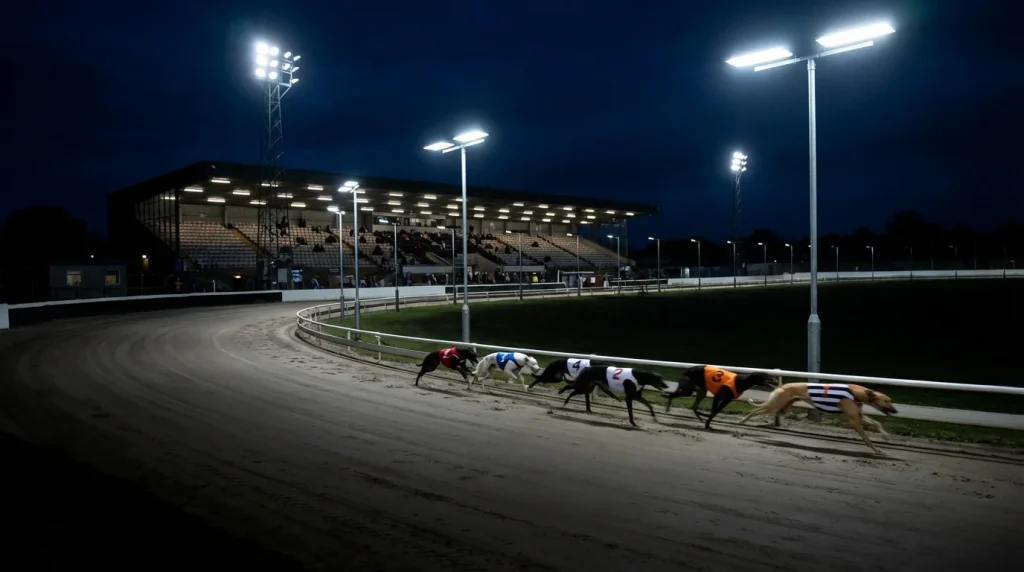
Not All Tracks Are Built the Same
Not all tracks are created equal — some produce cleaner, more predictable races for forecast punters. This is not a controversial statement among anyone who has spent time studying greyhound results across different venues. Track geometry, surface quality, grading consistency, and the local dog population all contribute to how reliably form translates into finishing order. For forecast bettors — who need to identify the first two home, not just the winner — these factors matter even more than they do for simple win punters.
The UK currently has 18 licensed tracks operating under the Greyhound Board of Great Britain. Each one has its own character, its own quirks, and its own relationship with forecast profitability. Some tracks consistently reward careful form analysis with forecast dividends that justify the stake. Others are chaotic enough that even the best-informed selections feel like guesswork. Knowing which is which before you start browsing the race card saves both time and money.
This is a guide to what makes a track forecast-friendly and which UK venues deliver the most reliable results for punters who bet on the first two home.
What Makes a Track Forecast-Friendly
A forecast-friendly track has consistent going, minimal trap bias, and races that reward form over luck. That last point deserves emphasis. Some tracks, by virtue of their bend profiles and straight lengths, produce crowded first bends where bumping and checking are routine. When dogs lose positions through interference rather than ability, the connection between form and result weakens — and forecast betting becomes a lottery.
The ideal track for forecast punters has wide, sweeping bends that allow dogs to find their running line without constant contact. It has a grading system that places dogs of genuinely similar ability together, so races are competitive but not random. It has a track surface that is well-maintained and drains evenly, so conditions do not flip between the first and last race on the card. And it has enough racing — both in volume and quality — to generate the kind of data that makes form reading meaningful.
Trap bias also plays a role. A track where one trap wins disproportionately creates an asymmetry that can be exploited, but if the bias is extreme, it compresses the forecast market. When everyone knows Trap 1 wins 22% of races at a given venue, that dog becomes over-bet in the forecast pools, and the dividend drops. A moderate, stable bias is useful; an extreme one is not.
Finally, pool size matters for tote forecast punters. Tracks with large, regular crowds generate deeper pools, which produce more stable and generally more generous dividends. A well-attended evening meeting at a popular track is a fundamentally different forecast proposition from a quiet afternoon at a smaller venue.
UK Tracks Where Forecasts Reward Form
Here are the UK tracks where form tends to hold and forecasts pay at rates worth the stake. This is not an exhaustive ranking — it is a practical shortlist based on track characteristics, result patterns, and the experience of regular forecast bettors.
Hove. Brighton and Hove has long been regarded as one of the fairest tracks in Britain. The galloping circuit suits dogs that run on ability rather than luck at the bends. The grading is generally tight, and the local kennel base includes several top trainers who prepare their dogs professionally. Forecast dividends at Hove tend to be in a productive middle range — not as spectacular as you might find at a more chaotic track, but consistently rewarding for punters who do their homework. The Thursday evening card, in particular, draws decent pools and competitive fields.
Nottingham. The Colwick Park track offers a fair, galloping surface with bends that are wide enough to reduce crowding. Nottingham hosts several notable open races and previously staged the English Greyhound Derby in 2019–2020 before it returned to Towcester, which means the quality of dogs and the depth of grading data are both strong. Form holds reasonably well here, and the Monday evening cards are popular enough to support healthy forecast pools. Trap bias at Nottingham is moderate, with no single trap dominating across all distances.
Romford. One of the busiest tracks in the country, Romford runs frequent meetings and draws large crowds — both in person and through live streaming. The track’s long straights reward speed, and the first-bend dynamics are relatively clean for a track of its size. Romford’s forecast pools are among the deepest in UK greyhound racing, which is a significant advantage for tote forecast bettors. The sheer volume of racing here also means you can build a substantial data set for any dog that races regularly at the venue.
Monmore Green. Wolverhampton’s Monmore track is a sharper circuit with tighter bends, but the grading is consistently competitive and the dog population includes several strong local kennels. Forecast bettors who learn the specific dynamics of Monmore — particularly how trap draws interact with the short run to the first bend — find the track rewards specialisation. The Thursday evening meeting is the flagship card and generates good pool depth.
Towcester. Towcester is a large, galloping track that hosts some of the biggest races in the sport, including the English Greyhound Derby final. The wide bends and long straights make it one of the fairest tracks for forecast betting, as dogs can run their race without constant interference. Trap 1 historically performs well here due to the rail advantage on the sweeping bends, which is useful information for forecast selection. Major event nights generate substantial pools.
Sheffield. The Owlerton track in Sheffield runs regular Friday and Saturday evening cards that attract solid fields and decent pools. The track is fair, the grading is competitive, and form tends to hold at distances from 480 metres upward. Sheffield is less fashionable than some southern tracks, which means it can be overlooked by casual punters — and less public attention often translates to less predictable pool distribution, which can benefit contrarian forecast selections on the tote.
Tracks to Approach with Caution
Some tracks are forecast traps — high variance, volatile results, and dividends that do not compensate for the difficulty. Tracks with very tight first bends are the primary culprits. When the run from the traps to the first turn is short and the bend itself is sharp, crowding and bumping become near-inevitable. This randomises the first-bend order, which in turn randomises the finishing positions in a way that form cannot predict.
Tracks with small local dog populations can also be problematic. When the same dogs race against each other repeatedly in the same grades, the form becomes circular — Dog A beats Dog B, Dog B beats Dog C, Dog C beats Dog A — and results lose the directional consistency that forecast betting depends on.
Smaller tracks with thin tote pools are also worth flagging. Even if you pick the correct forecast, a thin pool can produce a dividend that barely covers a combination stake. At these venues, the bookmaker CSF is often the safer settlement option, but even the CSF will be modest if the placed dogs are both short-priced.
None of this means you should never bet forecasts at these tracks. It means you should adjust your staking, lower your combination count, and lean toward straight or reverse forecasts where you have genuine conviction about two specific dogs rather than spreading coverage across multiple runners.
Choosing Your Track
Track selection is the first bet within every forecast — choose the venue before you choose the dogs. If you are betting forecasts regularly, specialising in two or three tracks is more effective than dabbling across the entire GBGB calendar. You build familiarity with the grading, the trainers, the track characteristics, and the typical pool dynamics. That familiarity compounds into an edge that no race card can give you on first reading.
Start with a track that runs on a night convenient for your schedule. Study the results for a month without betting. Note which dogs recur, which traps perform, and how the form figures correlate with actual finishing positions. When you start betting, stick to the track you know. The dogs will change, the races will change, but the track stays the same — and that consistency is your foundation.
Find more track guides at greyhoundforecast.
Also read our history of UK greyhound racing.
